amont
Catch the bad commit before it exists — and take the whole thing back out in one command.
One Rust binary, no runtime, no config file to write. Install it, run
amont install in a repository, and your next commit is checked by thirty-nine
language-aware checks that already know when to stay out of the way.
Why this one
- Useful in the first minute. Other hook managers install empty and wait
for you to write YAML. amont ships thirty-nine checks — commit-message
conventions, merge-conflict markers, linters and formatters for the languages
your repository actually uses, branch rules, your test suite — and each one
fires only where the repository has opted into its tool.
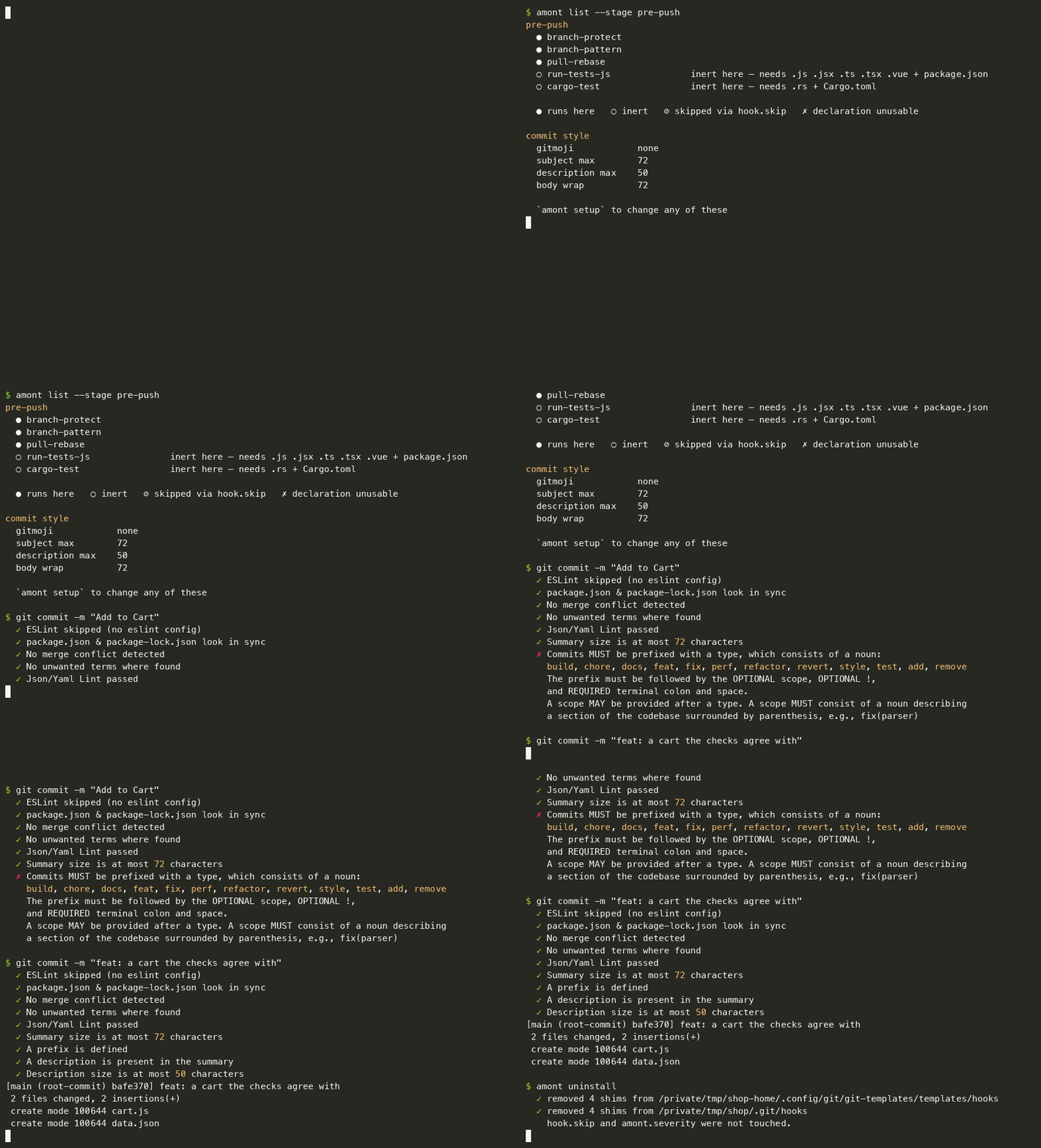
amont listshows you what runs here, and why the rest will not. - Nothing on the commit path but
std. The hook binary links no external crates, and CI fails any build that changes that. What runs on every commit, with your credentials, has the smallest supply chain this project could arrange: none. - A cloned repository cannot run code on your machine. Repositories declare
their own checks in a committed
amont.conf— and those declarations are inert until you review them and sayamont trust. No other hook manager puts a review gate betweengit cloneand running the repository's commands. The trust model. - Your uncommitted work is never collateral. Checks run against exactly
what you staged; unstaged work is held aside without
git stashand restored even if a check panics. The design that makes that true is the most carefully argued part of the codebase. - Leaving is one command.
amont uninstallremoves exactly the six shims install wrote — a hook you or another tool put there is named and left alone. A gate you cannot exit cleanly is a gate you were right not to enter.
How that stacks up against pre-commit, lefthook and husky, feature by feature: how it compares.
Why you can let this near your commits
A prompt theme is cosmetic. This blocks commits and pushes, reads every staged file, and runs with your credentials while nobody is watching — so the claim it has to earn is not "delightful", it is "harmless".
- The commit path links no external crates.
amontandamont-runtimeare std-only, andscripts/check-no-deps.shfails a build that changes that — fails closed, so a cargo error or an unreachable registry is a failure rather than a reassuring green tick. - No telemetry, no update checks. With the commit path std-only there is
not even an HTTP client linked to phone home with. The network a push does
touch is git's own and the tools you opted into:
pull-rebaserunsgit ls-remote/git fetchagainst your upstream (off withgit config amont.autoRebase false, see configuration), and theaudit-*checks callcargo audit,npm audit,pip-auditandgovulncheck. - Over a thousand tests, run on Linux, macOS and Windows, alongside
cargo fmt --check,clippy -D warnings, an MSRV floor of 1.74 compiled for the commit path, andcargo-audit. - v1.0.0 followed a full security review, and each finding landed with a committed reproduction — a drive-by RCE via a relative path in the shim, a held-store format that let a repository plant a symlink outside the worktree, a trust prompt a repository could conceal declarations from.
- Your uncommitted work is the thing that must never be lost. The release
profile deliberately omits
panic = "abort"so theDropthat restores unstaged work still runs when a check panics — with a test asserting on the manifest, because no behavioural test could catch that regression.
Threat model and private reporting: SECURITY.md.
The repositories around it
Three companions, each its own repository because it runs somewhere amont deliberately does not:
- amont-agent — a Claude
Code
PreToolUsehook for the mistake no git hook can reach, because it lives in the command string itself:git push … | tail -5reports tail's exit status, so a rejected push reads as success. The guard judges the pipeline before it runs. Independent by design — no shared code, and neither needs the other; they meet in one optional place, where its session notice asksamont agents-md --checkwhether the guidance block an agent is about to believe has gone stale. - attest — the CI half of
amont.attest: when every pre-push block gate passed locally, amont leaves a signed note on the tree it tested, and this single-purpose verifier lets CI skip work provably already done. Fail-open by construction, and separate precisely so that amont itself never runs in CI — the reasoning. - amont-pack-java — the worked example of a pack: how checks amont deliberately does not build in get shipped anyway.
Start here
- Installing and activating — get the binary, turn hooks on in one repository (or every repository you ever clone), and turn them off again.
- The checks — what the thirty-nine built-ins do, and what each one needs before it fires.
- Opting out — skip one check, downgrade a whole trigger, bypass a single commit, or remove the hooks entirely.
Then, as you need them: where the hooks fit in your flow · commit and branch conventions · configuration · custom checks · the trust model.
How the documentation is organised
The pages under Using amont are for anybody who has installed it or is deciding whether to.
The pages under Design records are for maintainers: the arguments behind the current behaviour, kept because "why is it like this" is a question that comes back. Do not start there.